


Everyday blends of nuts, seeds, and fruits simple, satisfying, and ready to enjoy anywhere.
Dried Sour Cherries — Lightly Sweetened - 0.5 lb (8 oz)
Regular price
$18.97
-13%Sale price
$18.97
Regular price
List Price:
$21.82
Quantity
Couldn't load pickup availability
Free Shipping Over $25
Packed Fresh USA
100% Satisfaction Guarantee


You may also like
-
Raw Almonds — In Shell
Regular price From $12.97Sale price From $12.97 Regular price List Price: -
Raw Brazil Nuts, Shelled
Regular price From $7.97Sale price From $7.97 Regular price List Price: -
Happy Birthday Treats, Nuts & Dried Fruits Tower Gift Basket with Bday Ribbon (12 Assortments)
Regular price $49.68Sale price $49.68 Regular price List Price: -
Birthday Snack Box — Care Package with 45 Sweet Treats + Happy Birthday Card
Regular price From $29.38Sale price From $29.38 Regular price List Price: -
Raw Brazil Nuts, Shelled
Regular price From $7.97Sale price From $7.97 Regular price List Price: -
Mixed Candy Heart Shaped Gift Basket, Love in A Box (6 Assortments)
Regular price $29.99Sale price $29.99 Regular price List Price:
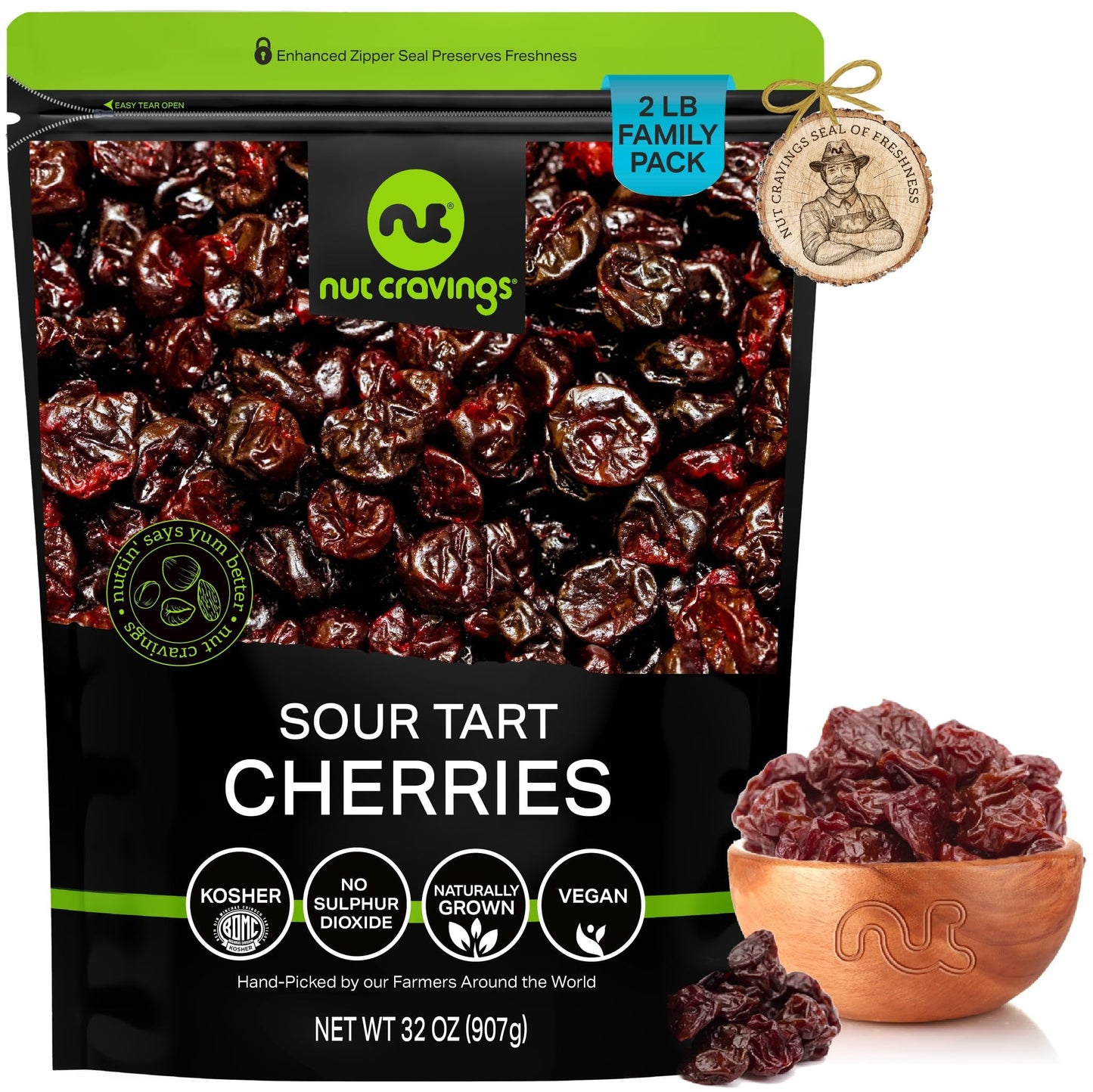
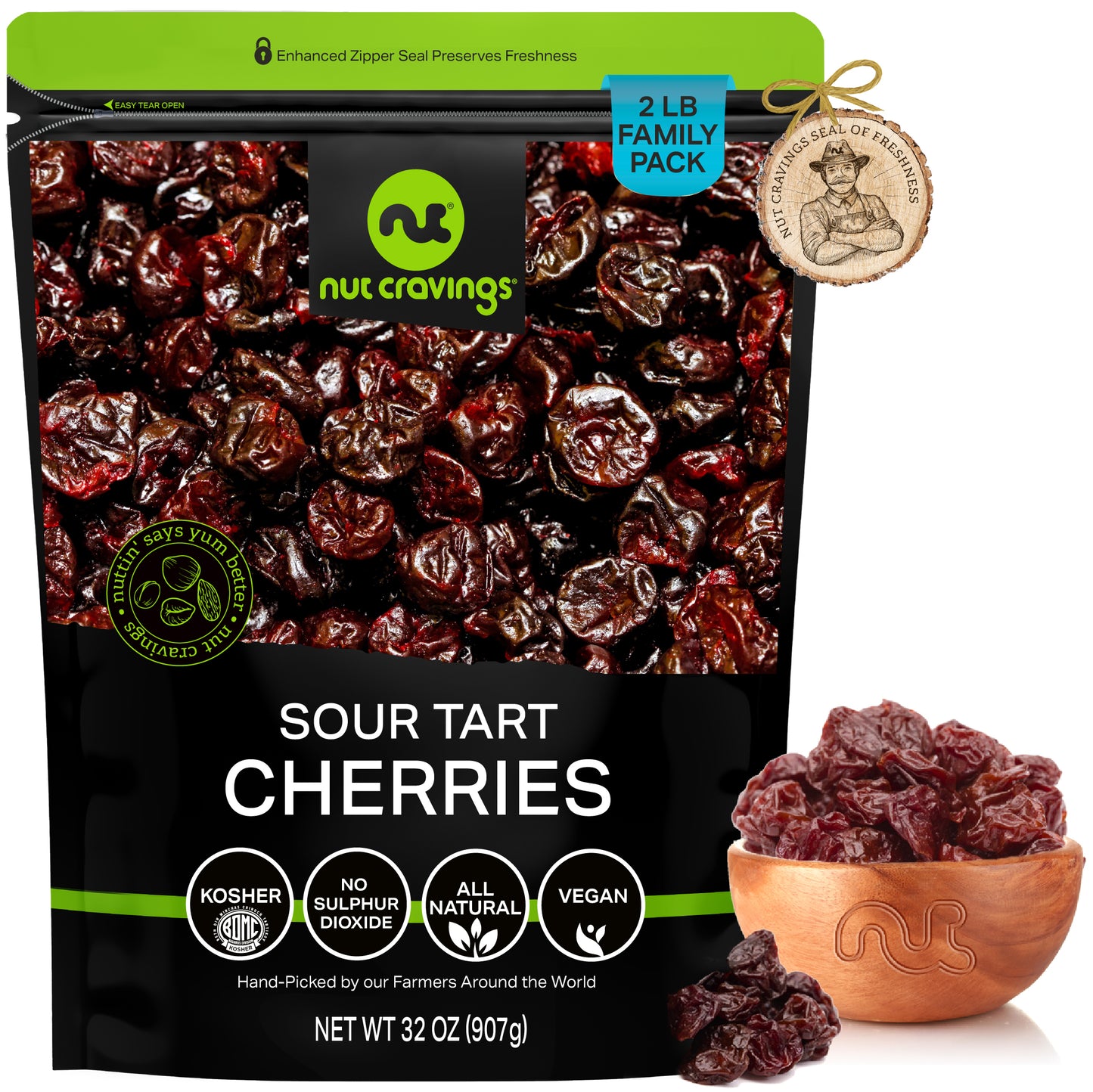
Dried sour cherries are a specialty ingredient that most grocery stores don't stock, which is why people who actually cook with them end up ordering online. Sour cherries (the Montmorency variety) are the tart counterpart to the sweet Bing cherries sold fresh in summer. They're smaller, sharper in flavor, and genuinely useful for baking, Middle Eastern cooking, cheese boards, and wellness applications where sweet dried fruit would be too one-dimensional. Ours are lightly sweetened to take the edge off the tartness without masking what makes them worth using in the first place, and unsulphured so there are no sulphur dioxide preservatives in the bag.
What You're Buying
- Variety: Montmorency tart cherries, pitted
- Processing: soft-dried, lightly sweetened with cane sugar
- Ingredients: Montmorency Tart Cherries, Cane Sugar, Sunflower Oil
- Serving size: 1 oz (28g) / 80 servings per container (5 lb)
- Preservatives: none (no sulphur dioxide)
- Packaging: resealable food-safe stand-up bag
- Shelf life: 6 to 9 months pantry, up to 12 months refrigerated
- Allergen note: manufactured in a facility that also processes tree nuts, wheat, peanuts, and soy
Good For You
Every bag of Dried Sour Cherries from Nut Cravings carries three attributes you won't find on most commercial dried fruit:
- No Sulphur Dioxide: Most mass-market dried fruits use sulphur dioxide to preserve bright color and extend shelf life. Our cherries contain none. The color is a deeper, more natural red rather than the artificially bright pink of sulphured commercial products.
- Naturally Grown: Montmorency tart cherries grown without the use of synthetic inputs.
- Vegan: No animal products, animal-derived additives, or honey. Cherries and a small amount of cane sugar.
How to Use Dried Sour Cherries
Baking
Sour cherry pies, crumbles, galettes, cobblers, rugelach, and Black Forest cake all traditionally call for sour cherries rather than sweet. Hungarian, Polish, and German pastry traditions lean heavily on this variety. For cookies, muffins, and quick breads, soak the cherries in warm water or juice for 20 to 30 minutes before folding into batter. For pies and compotes, simmer directly in the filling liquid until plump. Crack and chop immediately before adding to batter for the best flavor.
Middle Eastern and Persian Cooking
Sour cherries are a core ingredient in Iranian albaloo polo (sour cherry rice cooked with saffron and served alongside lamb kofta), Turkish stuffed vegetable dishes, Lebanese cold yogurt cherry soup, and Syrian lamb preparations. The tartness balances rich meat and rice dishes in a way sweet dried fruit cannot. For albaloo polo, add about 2 oz of dried sour cherries per cup of dry rice for the final 15 minutes of steaming so they plump without disintegrating.
Salads, Grain Bowls, and Cheese Boards
Scatter over kale salads, farro bowls, quinoa with goat cheese, or wild rice pilafs. The tartness cuts through rich dressings and earthy grains. On a cheese board, dried sour cherries work especially well alongside aged cheddar, blue cheese, brie, or goat cheese, where the acid cuts through the richness of the cheese. For a broader dried fruit selection on your board, see our Dried Cranberries — Lightly Sweetened and Dried Apricots, Turkish — No Sugar Added.
Trail Mix and Granola
Replace or mix with standard cranberries for a tarter, less-sweet trail mix profile. Pairs especially well with dark chocolate and pistachios. For a comparison with a sweeter unsulphured option in the same format, see Dried Blueberries — Lightly Sweetened.
Yogurt and Cottage Cheese
A handful of dried sour cherries on cottage cheese or Greek yogurt with honey is a simple, protein-forward snack. The tartness of the cherries balances the dairy richness without requiring added sweetness.
Savory Sauces for Poultry and Game
Simmer dried sour cherries with port wine, shallots, and thyme for a classic reduction sauce for duck, pork tenderloin, or turkey. The cherries rehydrate in the cooking liquid and thicken the sauce naturally. This technique works at any holiday meal where a fruit-forward pan sauce fits the protein.
Sleep and Wellness Use
Montmorency tart cherries are one of the few significant dietary food sources of naturally occurring melatonin. A small serving (about 1 oz, roughly 1/4 cup) 30 to 60 minutes before bed is how some people incorporate them into a sleep routine. This is a whole-food application of published research on tart cherry and melatonin, not a medical claim. Speak with a healthcare provider before making any changes to a sleep management plan.
Choosing the Right Size
Dried Sour Cherries are available in 0.5 lb, 1 lb, 2 lb, 3 lb, and 5 lb sizes. The 0.5 lb or 1 lb bag suits a first purchase or occasional recipe use. The 2 lb size is the right fit for regular bakers who use sour cherries across multiple recipes in a season. The 3 lb and 5 lb sizes are for households that go through dried sour cherries at a pace small grocery-store bags can't sustain, or for anyone who does a large batch of holiday baking in one go. For bulk sizes, move a portion to the freezer on arrival to protect freshness.
For a curated mixed dried fruit selection that includes sour cherries alongside other varieties, the Gourmet Prime Assorted Dried Fruit Tray is a good place to explore what works best for your cooking and snacking needs before committing to a larger single-variety bag.
Storage
Seal the bag after each use and store in a cool, dry place. In the sealed bag at room temperature: 6 to 9 months. Refrigerated in the sealed bag: up to 12 months. Frozen in a sealed freezer bag: 12 or more months without significant texture or flavor change. For bulk sizes (2 lb, 3 lb, 5 lb), transfer half to a sealed freezer bag immediately on arrival and work through the room-temperature portion first.
Unsulphured dried fruits gradually lose moisture over time. If left open in a warm kitchen, the cherries turn firmer and more leathery but remain fully usable in baking, where they rehydrate during cooking. Only crack what you plan to use within the short term.
Dried Sour Cherries Guarantee
Every order is backed by our 100% Satisfaction Guarantee. If you are not satisfied with your purchase for any reason, contact our team and we will make it right. That applies to every bag we ship, every time.
Customer Reviews
Frequently Asked Questions
We’re More Than Just Snacks
Nuts

Dry Fruits
Everyday blends of nuts, seeds, and fruits simple, satisfying, and ready to enjoy anywhere.

Gifts
Beautiful assortments made to delight perfect for birthdays, holidays, & heartfelt thank yous.

Organic
Pure and certified organic — clean, natural ingredients for mindful snacking.

Seasonal Gifts
Limited-edition assortments inspired by every season and celebration.

Chocolate & Treats
Chocolates, brittles, and confections that turn any snack break into a special moment.

Mixed Nuts & Bar Mix
Protein-packed combinations of nuts, seeds, and fruits crafted for energy and wellness.

Care Packages
Thoughtful boxes filled with joy and flavor — send care to friends, family, or colleagues.

Corporate Gifting
Elegant, customizable boxes designed to impress teams, clients, and partners.